
5 Signs Your Statesville Home Needs Concrete Foundation Repair
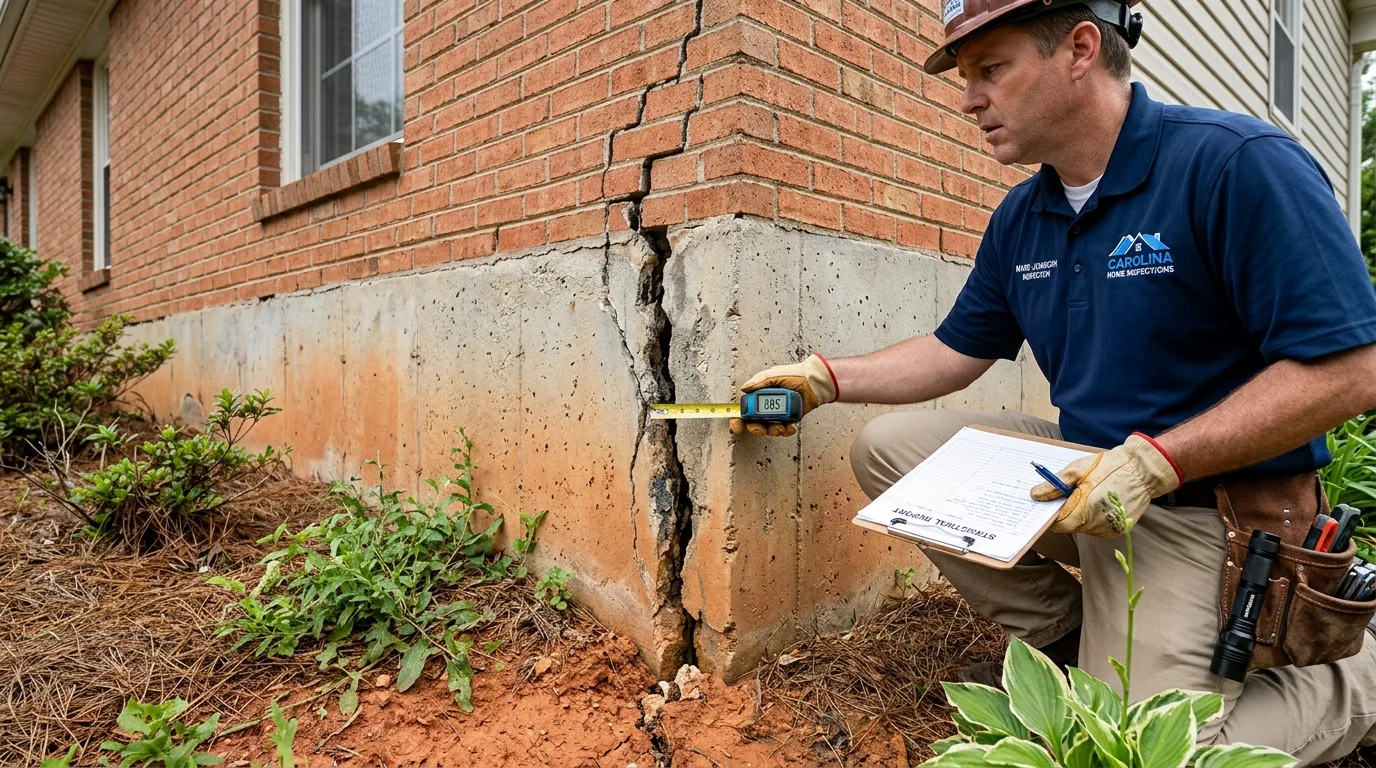
By spring in Statesville, many homeowners walk their property after winter and see things that weren’t there in October — new cracks in the foundation, doors that have started sticking, or gaps that appeared where the slab meets the exterior wall. These are the signs that Iredell County’s clay soils and freeze-thaw cycles have been at work. Some are cosmetic; some are structural. Knowing the difference matters, and knowing when to call a contractor matters even more. This guide covers the five most common warning signs and what they indicate about the severity of the underlying problem.
In this post, we cover: the five key signs of concrete foundation problems in Statesville, what’s causing them in Iredell County’s conditions, and how to evaluate severity.
Foundation Concern? Get a Free Assessment in Statesville
Honest evaluation — we tell you what you need, not what costs the most. Call (888) 376-0955.
Why Foundation Problems Happen More in Statesville
Foundation problems in Statesville don’t happen randomly. They’re the predictable result of building on Iredell County’s challenging soil conditions without adequate base preparation, drainage design, or both. The Iredell soil series has clay content of 40–85% in the subsoil, rated as having VERY HIGH shrink-swell potential. Every wet season, that clay swells against the foundation; every dry season, it contracts and pulls away, leaving voids that allow the foundation to shift.
The freeze-thaw season from December through February adds a second mechanism: water that infiltrates foundation concrete — through cracks, through porous concrete, through gaps at the slab edge — freezes and expands, widening existing cracks and creating new ones. Homes in the Academy Hill Historic District and older residential neighborhoods throughout Statesville often show the cumulative effects of decades of this process.
Sign 1: Cracks Wider Than 1/4 Inch in the Foundation Wall or Slab
Small hairline cracks in concrete are normal — they result from the concrete’s natural shrinkage as it cures and are not structural. The threshold that warrants attention is a crack wider than 1/4 inch, a crack that is growing noticeably over months, or a crack that is horizontal rather than vertical or diagonal.
Vertical and diagonal cracks in foundation walls often result from differential settlement — one part of the foundation has shifted relative to another. In Statesville, this typically traces to uneven soil moisture beneath the foundation, with the wetter areas swelling more than the drier areas.
Horizontal cracks in foundation walls are more serious — they indicate lateral pressure from saturated soil against the wall, and can signal that the wall is bowing inward. This is a structural issue that requires professional evaluation promptly.
Slab cracks running through the full depth rather than just the surface layer indicate that differential soil movement has overcome the structural capacity of the slab. The difference between a surface crack and a through-slab crack is usually apparent when probing with a screwdriver — a surface crack has solid concrete beneath it; a through-slab crack sounds hollow or the screwdriver passes through easily.
Sign 2: Doors or Windows That Stick, Bind, or No Longer Close Properly
Doors and windows that worked fine and now stick or won’t close properly are a classic indicator of foundation movement. When a foundation shifts — even slightly — the framing above it moves with it, changing the shape of door and window openings just enough to bind frames against their stops.
This symptom is particularly relevant in Statesville’s clay soil conditions because the foundation movement that causes it is often seasonal: the door may stick in wet winter months when the clay is swollen and pushing up on one side of the foundation, then free up slightly in summer when the clay contracts. A door that only sticks in winter and functions normally in summer is less alarming than one that sticks progressively worse over multiple seasons — the latter suggests cumulative settlement rather than seasonal movement.
Sticking doors in a Statesville home should be investigated by checking whether any foundation cracks have appeared simultaneously. A sticky door alone isn’t necessarily a foundation problem (it could be seasonal wood expansion); sticking doors plus new foundation cracks is a combination that warrants prompt evaluation.
Sign 3: Visible Gaps Between the Slab and the Foundation Walls
Where the concrete slab meets a foundation wall, load-bearing interior wall, or exterior step, there should be no visible gap. A gap that wasn’t there before — or one that has visibly grown over seasons — indicates that the slab and the structural elements above it have moved relative to each other.
In Statesville, this commonly appears where the garage slab meets the foundation stem wall, or where an interior slab meets exterior walls on properties in the Highland Park and South Race Street areas. The gap is the physical evidence that the clay subsoil has shifted — either pulling away beneath the slab (causing settlement) or pushing upward against it (causing heave).
Small gaps (under 1/4 inch) that are stable over months are lower priority. Gaps that are growing, gaps over 1/2 inch, or gaps that appear around multiple perimeter points simultaneously suggest active, ongoing movement that needs professional evaluation.
Concerned About Foundation Movement in Your Statesville Home?
We provide free, honest assessments. No pressure to buy — just a clear picture of what's happening. Call (888) 376-0955.
Sign 4: Floors That Slope, Feel Bouncy, or Have Noticeable Low Spots
Concrete slab floors that slope noticeably, feel uneven underfoot, or have developed low spots where water pools after mopping indicate that the slab has settled differentially — one section is lower than another because the soil beneath it has compressed, shifted, or developed voids.
In Statesville, this is most common in lower-lying properties where the seasonal water table is closest to the surface. The perched water table in Iredell clay soils can sit as shallow as 1 foot below the surface from December through April, saturating the soil directly beneath slabs during these months. When that moisture eventually evaporates in summer, the soil consolidates slightly — and if there is no adequate base layer of compacted gravel, the slab settles with it.
The test: place a long level on the floor and check in multiple directions. A floor should not deviate more than about 3/16 inch over 10 feet under normal residential tolerance standards. More deviation than that indicates differential settlement that may warrant slab lifting (mudjacking) or, in severe cases, section replacement.
Sign 5: Water Intrusion at the Foundation Edge or Slab Perimeter
Water consistently entering a basement, crawlspace, or interior area through the foundation wall or slab edge after heavy rain events indicates that the drainage design is failing. In Statesville’s Iredell County conditions, this typically means one of three things: the foundation lacks adequate waterproofing, the perimeter drainage (drain tile, gravel, slope) is not directing water away from the foundation, or the landscape grading around the home has settled to slope toward rather than away from the foundation.
Water intrusion through concrete is damaging on multiple levels: it contributes to freeze-thaw cracking in winter, it softens the clay subsoil directly adjacent to the foundation (reducing bearing capacity), and it creates conditions for efflorescence and chemical attack on the concrete matrix over time. Addressing water intrusion promptly — by correcting drainage before attempting to patch the concrete — is the only approach that actually solves the problem rather than temporarily masking it.
Frequently Asked Questions
How do I know if my foundation crack is structural or cosmetic?
Width, orientation, and behavior over time are the key indicators. Hairline cracks (under 1/16 inch) that are stable are typically cosmetic shrinkage cracks. Cracks wider than 1/4 inch, horizontal cracks in foundation walls, cracks that are actively growing, or cracks accompanied by door/window binding or floor sloping all suggest structural movement. A free professional assessment in Statesville can give you a definitive answer — don’t guess on structural issues.
What causes most foundation problems in Statesville NC?
The primary cause is Iredell County’s high-clay, high-shrink-swell soil reacting to moisture changes. Foundations built on clay without adequate base preparation, drainage, or both experience differential movement as the clay expands and contracts seasonally. Freeze-thaw cycles from December through February accelerate the damage by forcing water into existing cracks. Drainage failure — water not moving away from the foundation — compounds both mechanisms.
Should I fix foundation cracks before winter in Statesville?
Yes — autumn is the best time to address known cracks. Water that enters open cracks in October freezes over December through February, expanding by roughly 9% and significantly widening the crack. A crack that costs relatively little to fill in October may require section replacement by March. Addressing foundation issues before the freeze-thaw season is one of the most cost-effective maintenance practices for Statesville homeowners.
Free Foundation Assessments for Statesville Homeowners
Call Statesville Concrete Pros at (888) 376-0955. Serving Mooresville, Salisbury, Kannapolis, and all of Iredell County.
Related: