
Winter Concrete Care in Statesville, NC: Protect Against Freeze-Thaw
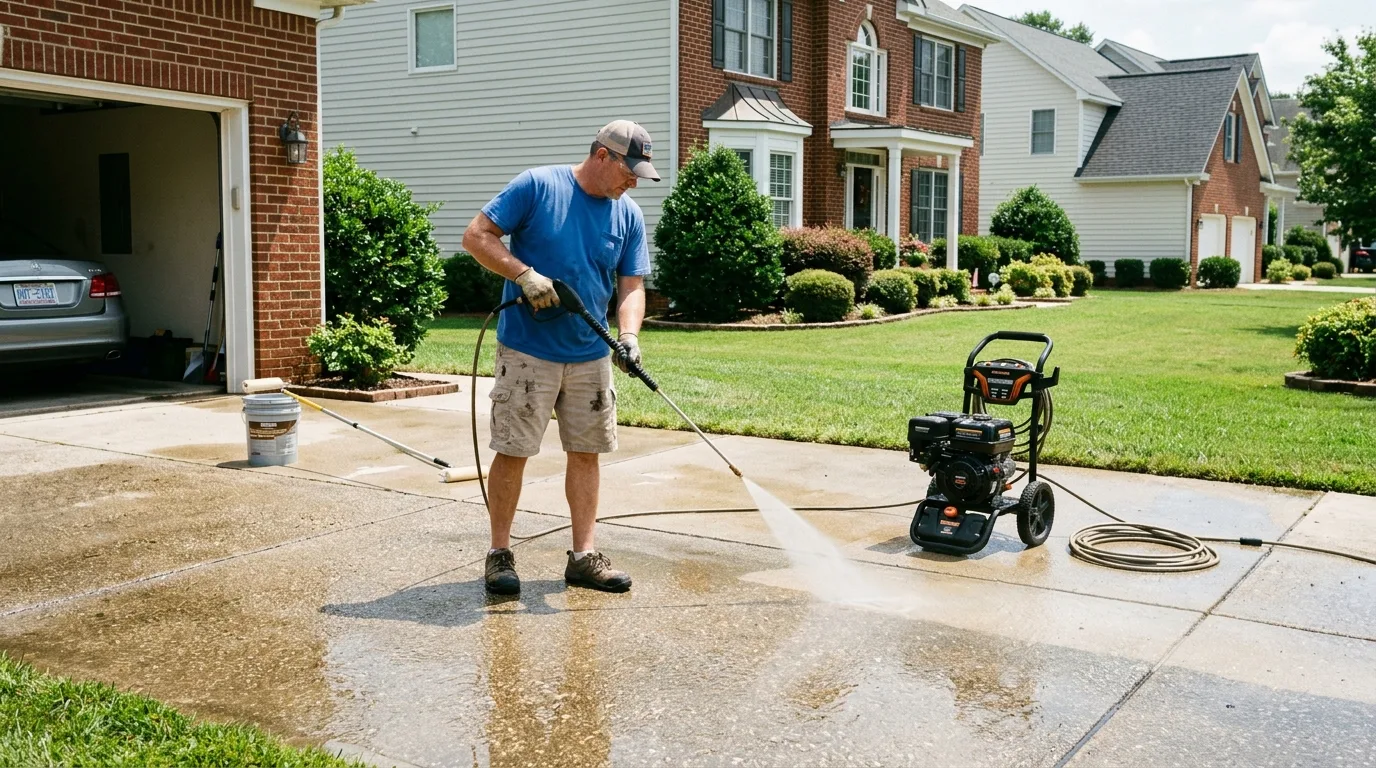
October is when Statesville homeowners should be thinking about their concrete — not March. By the time spring arrives and the freeze-thaw damage is visible, the window to prevent that damage has already closed. Water that entered unsealed cracks or porous concrete in autumn spent December through February freezing and expanding, progressively widening what was a manageable maintenance issue into a repair project. This guide explains how freeze-thaw damage actually occurs in Statesville’s climate, and what concrete care before and during winter genuinely prevents versus what’s marketing language.
In this post, we cover: how freeze-thaw damage works on Statesville concrete, the maintenance actions that actually prevent it, what to do during winter months, and how to assess damage in spring.
Pre-Winter Concrete Assessment in Statesville
Seal and fill before the freeze. Call (888) 376-0955 for a free estimate on fall concrete maintenance.
How Freeze-Thaw Damage Happens on Statesville Concrete
Water expands by roughly 9% when it freezes. For concrete driveways, patios, and sidewalks in Statesville, this means any water that has entered the concrete through porous surface paste, unsealed cracks, or open joints expands every time the temperature drops below 32°F — and contracts when it warms back up. Iredell County averages several significant freeze-thaw cycles per winter, typically from December through February, with temperature swings that cross the freezing threshold multiple times in a single week.
The damage accumulates progressively. After the first winter with unsealed or cracked concrete, you might notice that surface pitting has deepened slightly or that a hairline crack is now more visible. After 3–5 winters, the crack that was hairline-thin is now 1/4 inch wide. After 10 winters, a crack that could have been filled for $150 has become a structural failure that requires section replacement.
The Iredell soil series beneath most Statesville concrete compounds this by holding moisture against slab edges and joints for extended periods after rain events. The combination — moisture-retaining clay soil pressing against concrete from below, autumn rain saturating the concrete from above — sets the stage for maximum freeze-thaw damage in the December through February window.
Why Fall Is the Most Important Maintenance Season in Statesville
Fall is more important than spring for concrete maintenance in Statesville — a counterintuitive idea, since spring is when damage becomes visible. Here’s the logic: fall is the last opportunity to seal concrete and fill cracks before the freeze-thaw season. October and early November in Statesville offer ideal conditions for sealing work — temperatures are in the 50–65°F range that allows sealer to cure properly, and there are enough consecutive dry days to allow application and curing without rain exposure.
A spring seal job addresses the concrete that survived winter. A fall seal job protects the concrete through winter. For homeowners who can only do maintenance work once a year, fall is the higher-value timing in Iredell County’s climate.
Concrete Actions That Actually Prevent Freeze-Thaw Damage
1. Seal cracks before October ends
Any crack in your driveway, patio, or sidewalk that is visible now should be filled before the first significant freeze event. A polyurethane crack filler that remains flexible prevents water from entering during autumn rains, so there’s no water to freeze. The cost of filling a 1/4-inch crack is minimal; leaving it open for one Statesville winter increases its width and the cost of the eventual repair significantly.
2. Apply a penetrating concrete sealer
A quality penetrating sealer (silane-siloxane chemistry is the right type for outdoor concrete in NC’s climate) reduces water absorption by making the concrete’s pore structure hydrophobic. Water beads off rather than being absorbed. This significantly reduces the moisture available to freeze within the concrete matrix during December through February. Apply when surface temperatures are above 40°F and rain is not forecast for 24 hours after application.
3. Correct drainage issues before winter
Water that pools against concrete at the foundation edge, at driveway transitions, or against patio edges due to grade problems freezes in contact with the concrete and exerts hydrostatic pressure during freeze events. Correcting drainage before winter — either by regrading adjacent soil or adding drainage channels — removes the source of water contact rather than just trying to resist it.
Fall Concrete Sealing and Crack Repair in Statesville
Don't wait until spring to address cracks visible now. Call (888) 376-0955 for a free assessment.
What to Do (and Not Do) During Winter in Statesville
Do:
- Use sand or kitty litter for traction on icy concrete surfaces — both provide grip without damaging the concrete
- Clear snow promptly to reduce the melt-refreeze cycle on the surface
- Address any new cracking observed after a significant freeze event by photographing and monitoring — report to your contractor in spring if cracks appeared or grew
Don’t:
- Apply rock salt or any chloride-based deicing product to concrete in Statesville — chlorides accelerate concrete deterioration by penetrating the concrete matrix and accelerating corrosion of embedded rebar, as well as directly attacking the concrete paste. This is the fastest way to damage a Statesville driveway or patio.
- Use metal shovels aggressively on stamped concrete surfaces — metal edges can chip or scratch the decorative layer. Use plastic-edged shovels or snow blowers on stamped work.
- Apply deicers to new concrete — concrete in its first winter (poured that spring or summer) is still gaining strength and is more vulnerable to deicing chemical attack than mature concrete.
Practical Guide to Fall Concrete Maintenance in Statesville
Before November: walk all concrete on your property and document:
- Any cracks wider than 1/16 inch (fill promptly with polyurethane filler)
- Any spalling or delaminated surface patches (have assessed for resurfacing vs. monitoring)
- Any areas where water pools against the concrete edge (address drainage)
- When your concrete was last sealed (if more than 3 years ago, reseal before winter)
For stamped concrete specifically, resealing is the highest-value maintenance action. The sealer layer is what protects the color and surface texture from freeze-thaw damage and UV fading — a thin or absent sealer layer leaves the decorative surface exposed to accelerated deterioration.
Assessing Winter Damage in Spring
By March in Statesville, the full extent of winter concrete damage becomes visible as soils thaw and dry. Spring assessment should look for:
New or widened cracks: Compare to your October photos. Cracks that grew significantly over winter indicate active soil movement or that moisture infiltration was more significant than expected.
Surface scaling or spalling: New areas of spalling that weren’t present in fall indicate that water entered the concrete through inadequately sealed areas and froze. The timing of resealing cycles should be reviewed.
Heaved or settled sections: Joint height changes between slab panels indicate soil movement under the slab during the freeze-thaw period.
Frequently Asked Questions
When should I seal concrete in Statesville NC?
Fall (September–October) is the best timing for Statesville concrete sealing. Apply sealer when surface temperatures are consistently above 40°F and rain is not forecast for 24 hours. This timing protects the concrete through the December through February freeze-thaw season. If you missed fall sealing, spring (April–May) is the second-best window — temperatures are appropriate and the summer UV season is ahead, making it a reasonable time to refresh protection.
What is the worst thing you can do to concrete in a Statesville winter?
Apply rock salt or calcium chloride deicing products. Chloride-based deicers penetrate concrete and attack the paste structure, accelerating surface scaling and eventually corroding embedded steel reinforcement. A few winters of deicing salt use can do more damage than a decade of freeze-thaw cycles on properly sealed concrete. Sand provides traction without the chemical attack — it’s the right choice for Statesville concrete.
How do I know if my concrete needs professional repair after winter?
If you see cracks wider than 1/4 inch that weren’t present in fall, sections that have heaved or settled more than 3/8 inch relative to adjacent panels, or surface spalling covering more than 10–15% of a patio or driveway area, professional assessment is warranted. A free estimate from Statesville Concrete Pros will tell you whether the damage requires repair, resurfacing, or section replacement — and what’s causing it so the same issue doesn’t recur next winter.
Fall Concrete Maintenance for Statesville Properties
Call Statesville Concrete Pros at (888) 376-0955. Serving Mooresville, Kannapolis, Hickory, Salisbury, and all of Iredell County.
Related: